
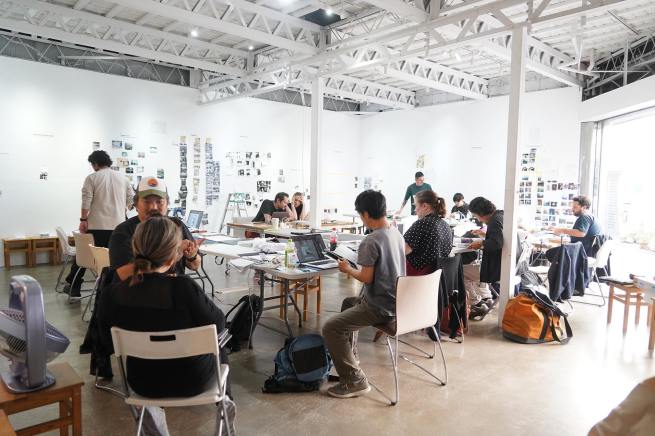
AUSTRALIAN PHOTOGRAPHER KATELYN-JANE DUNN RECENTLY UNDERTOOK A ‘BOOK AS OBJECT’ PHOTOBOOK DEVELOPMENT PROJECT IN TOKYO WITH YUMI GOTO AND JAN ROSSEEL AT REMINDERS PHOTOGRAPHY STRONGHOLD (RPS)
.
Every photographer has a book project that they want to develop. How-to-do-it information can be found online or from attending occasional local lectures or from friends and acquaintances. Some find professional service providers like designers and printers to smooth the way though the process though often it means relinquishing some/all control over the outcome. What happens if you want to D-I-Y …?
Katelyn-Jane Dunn has a long association with photography – she studied a Bachelor of Photography at the Queensland College of Art and has worked in various roles with the Queensland Centre for Photography, Australian Centre for Photography and Regional Arts NSW. Her current body of work has been in development since 2018, and she began developing the photobook in 2022 through a course with Paul McDonald and Stephanie Rose Wood at Contact Sheet in Sydney. In 2023 she was selected to attend a unique and radical workshop program, ‘Photobook as Object’, with Yumi Goto and Jan Rosseel at Reminders Photography Stronghold, Tokyo.
.
Here’s a Q&A with Katelyn-Jane Dunn with her story …
Question 1 You’ve just come through an intensive workshop with RPS working on your photobook project – Can you tell us broadly about how you feel about where you are at …?
I’m feeling really excited about the progress this book has undergone and some potential future directions of the work. While I’m expecting another year or so of work ahead, I feel like the workshop really distilled and clarified the direction of the book.
Question 2 Can you tell us about your book – The origins of the idea and stages of the development …?
My mother passed away in 2019 from a rare cancer. Like many daughters who have lost their mother in their 20s, I was bereft; after years of being a child and butting heads as a teenager, I had finally begun to meet my mother as a peer – only to lose her. As I began sifting through the boxes of photographs, albums and handwritten recipes she had left behind I felt as though there was a whole other side to my mother that I missed out knowing deeply.
I had begun shooting for the project as early as 2018 although I wasn’t entirely sure the direction other than to generally explore my matrilineal line in response to my mum’s cancer. Over time I began to mix fragments of text I was writing throughout her illness and after her death, and later, archival imagery. In 2022 I participated in the Photojournalism and Documentary Today course at Contact Sheet with Paul McDonald and Stephanie Rose Wood, which also featured two sessions of feedback from Harriet Tarbuck and Tom Goldner from Photo Collective in Melbourne. The course helped me crystallise my ideas, edit and sequence the work into a 64 paged version of the book. It was that dummy that I took to Tokyo to work on at the Photobook as Object workshop.
.
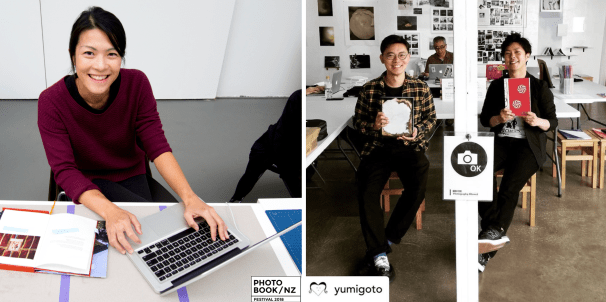
Question 3 How did you hear about Yumi Goto and the Reminders Photography Stronghold …?
I had previously seen Louis Lim and Tammy Law, two Queensland College of Art graduates, undertake workshops with the Reminders Photography Stronghold and really admired the artist books they developed. After the course at Contact Sheet I wanted to maintain the momentum I had and began researching different ways I could do that – it was then that I came across the Reminders Photography Stronghold’s work again and serendipitously, the Photobook as Object applications were open and closing in 3 days.
Question 4 How did you find the application process …?
I found it very simple – I already had written statements about the work and my research process as a part of the course with Paul McDonald and a selection of images I felt were fairly strong. Yumi and her team were very quick at notifying applicants whether or not they were successful, so I knew fairly quickly that I was heading to Japan in May. It was a really lovely surprise to open that email!
.
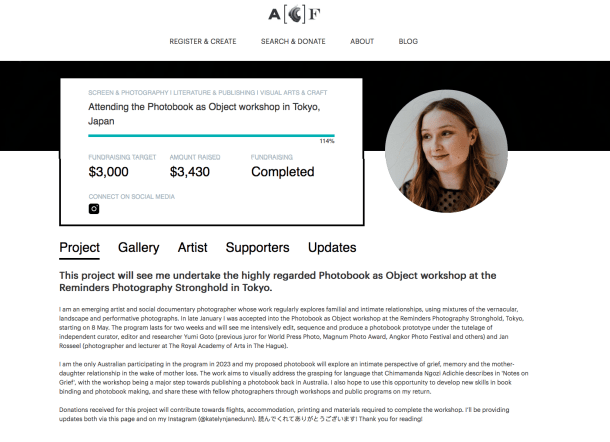
Question 5 You organised a crowd funding project to support your costs to attend the RPS – Can you comment on this aspect of your preparations …?
I set up a fundraiser using Creative Partnerships Australia’s Australian Cultural Fund platform. I’d seen other artists use the platform in the past and felt that it was a great way to raise funds outside of the usual grant rounds – particularly as it was February and I was leaving Australia in the first week of May. I also really liked that donations were tax deductible.
I developed a budget with several contingencies in case other grants I applied for didn’t come through, or if the fundraising fell short. It was then a month of campaigning on social media and communicating directly with donors. I didn’t know what to expect but was overwhelmed by the support. I eventually exceeded my target by 14%.
Question 6 Apart from travel arrangement what preparations did you need to make before attending the workshop …?
Yumi and Jan requested that we group our images into A, B and C lists, and to gather anything and everything that could be possibly relevant to our projects. I also had a chat with Jan ahead of the workshop and he made some recommendations for new images, so I worked on producing those in the lead-up. While book-binding is not the focus of the workshop (the editing, sequencing and ideas are), I wanted to feel confident with binding my dummies so I also took two courses with the NSW Guild of Craft Bookbinders. Learning from and talking to my teacher Avril Makula really opened my eyes to the opportunities of binding and artist books. Lastly, I talked a lot with fellow artists and friends about the work and soaked up as much feedback as I could.
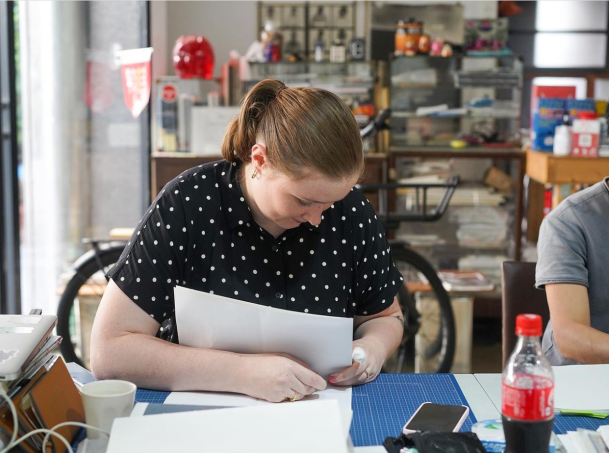
Questions 7 What was you first day at RPS like …?
On the first day participants are asked to paste up their images on the walls and speak about their proposed book. Feedback is given by Yumi and Jan on the spot, and fellow participants are able to provide feedback and make suggestions via an excel spreadsheet that I read and digested overnight. We broke for lunch, but otherwise it was lots of talking, listening and meeting my fellow photographers.
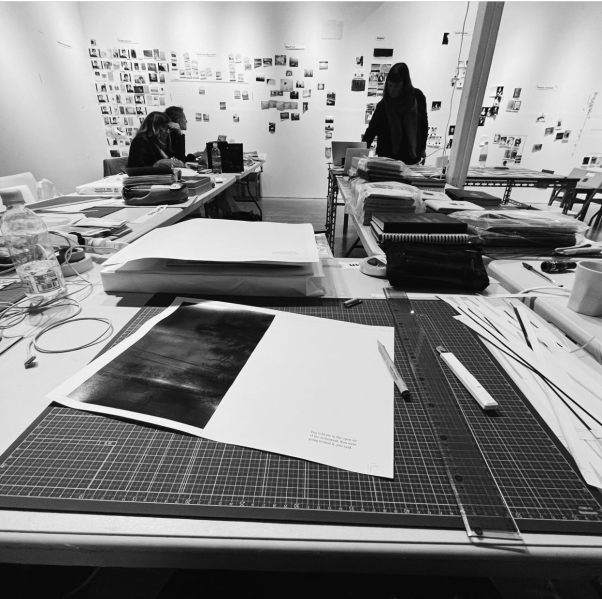
Question 8 We often see participants at RPS workshops surrounded by walls covered with prints – What is it like being in that space …?
It’s a fantastic space to work in. Everyone in our group had different approaches – some sequenced directly on the walls, others left their images up as sort of a mass-collage. I slowly removed my images from the wall as I used them in my first dummy. There’s a great collective energy working in the space with others which was a great contrast from working on the book on my own. One of the great things about the workshop is the many different voices and opinions you’ll receive about your work; not only from Yumi and Jan but your peers. After the day was done I’d often go and have dinner with other participants and we’d talk more about our books and that was really invaluable.
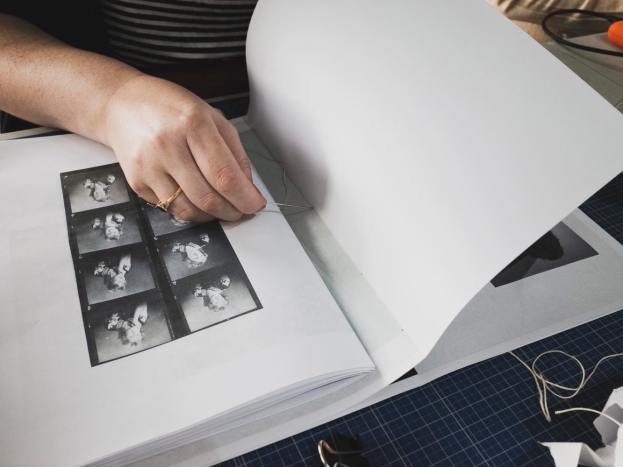
Question 9 Can you tell us about the ensuing book development at RPS (in some detail – stages of the process, crit sessions & language)
I made nine dummies in total at the workshop. I began by pasting my images into folded pages that roughly spoke to the dummy I brought to the workshop but taking into account the feedback I’d already received from day one. From there I spoke to Yumi and Jan and received very different feedback from each. I developed a new sequence with Jan, laid it out in InDesign and then printed and bound the next dummy and took it back to Yumi and Jan for feedback – the process continued iteratively like that for the duration of the workshop.
The sequencing was the biggest focus, and I quickly discovered I needed to create new text and dig through things that I hadn’t before; mobile photos, text messages and so on. After the first three days there was a four day break. The gallery was open from 1-7pm to work on our dummies if we wished but there was no feedback sessions. I spent those days clearing my head in the mornings by visiting shrines and temples nearby, and then went in to continue sequencing, printing and binding. The final three days of the workshop were a particular breakthrough for me – I’d been feeling really stuck, but Yumi encouraged me to make a version that contained as much as possible, which we called my ‘vomit’ dummy. From there, things seemed to take shape and it became clearer where I needed to shoot more images and so on.
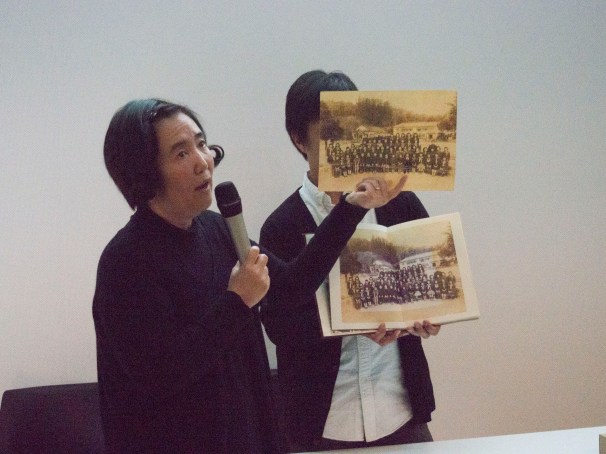
Question 10 What is it like to work with Yumi and Jan Rosseel …?
Both are fantastic to work with and incredibly generous with their time and knowledge. They often had very different opinions about my work but that’s exactly what you want in an intensive workshop like this – having different points of view really helped me both consider the viewer and challenge my own thoughts about the book and where it should go.
Question 11 Do you have an interesting story about being in Japan …?
I hadn’t been in Japan since I was 15 years old so it was wonderful to be back and practice my Japanese – although it was very fragmented! My memory was really tested when I realised that a small scratch on my left index finger had become severely infected several days in. Thankfully the dermatologist I saw was very patient as we used translator apps and charades, and a big shoutout to my high school Japanese teacher, Browne Sensei for the Japanese I can remember. Not only did it get me through medical appointments but it helped with conversation and buying paper in less tourist-dense areas of Tokyo.
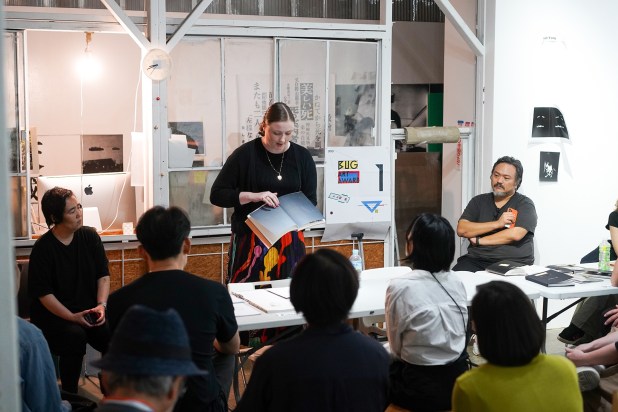
Question 12 Have you any advice for any aspiring photo-book makers out there thinking about how to accelerate their book project via an RPS workshop …?
My advice would be to apply and make the most of the opportunity you have. Working in the gallery on the four days in between was really invaluable for me, as was talking with my peers as much as possible. When you’re working in such a compressed time frame, particularly if its a personal project, its also a real emotional journey – so also be prepared to really dig in and ask lots of questions.
Thank You Katelyn-Jane … for sharing your Amazing story. Do keep us updated on future development of your book …
.
MORE ON REMINDERS PHOTOGRAPHY STRONGHOLD – FOLLOW THEM ON FACEBOOK https://www.facebook.com/Reminders.Photography.Stronghold
.
Text and images of the event ©Katelyn-Jane Dunn and Reminders Photography Stronghold. Questions and some photos ©Doug Spowart.
.
.
.
.
.

 Photobooks in Australia + New Zealand